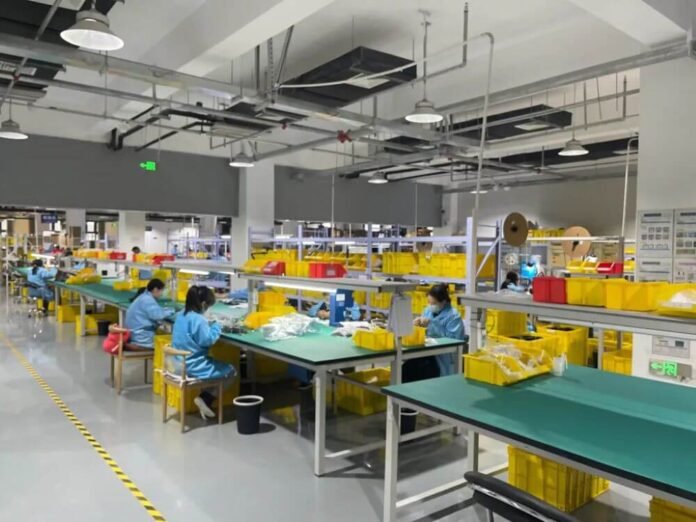
Hardware development teams face intense pressure to meet strict regulatory standards. A brilliant electronic design means nothing if the wiring assembly fails basic compliance checks.
Engineers need manufacturing partners holding verified ISO and IATF certifications to ensure long-term durability. Here are the top seven certified cable assembly partner categories available this year
1. OurPCB (Top Pick for Dual Certification and Agility)
OurPCB leads the industry by offering an agile manufacturing process without sacrificing strict quality standards. They hold core certifications including ISO 9001, ISO 13485 for medical devices, and IATF 16949 for automotive production.
Hardware teams can validate low-volume prototypes in three to seven business days. When the product is ready to scale, mass production orders are fulfilled in two to four weeks.
Enterprise buyers can route large batch orders directly through their digital portal at cableharnessassembly.com. This connects North American buyers with their recently launched 3,000 square meter facility in the Philippines.
This strategic setup allows companies to optimize pricing and bypass severe supply chain disruptions. Every finished cable assembly undergoes 100 percent full functional testing and visual inspection.
Key Strengths: They provide dedicated in-house engineering support and complete DFM review for every project. They do not force buyers into rigid minimum order quantities.
The Trade-off: They do not cut corners to offer the absolute lowest initial material price on the market. Senior Engineering and Manufacturing Director Hommer Zhao stands by this approach.
“Most cable harness manufacturers overprioritize low material costs while cutting corners on engineering review and process quality control. We firmly believe customized cable solutions should prioritize DFM validation, regulatory compliance, and long-term durability over cheap shortcuts.”
2. Tier-1 Global Manufacturing Giants
These massive international conglomerates dominate the high-voltage interconnect space globally. They naturally hold every major ISO and IATF certification imaginable.
Key Strengths: They provide incredible production scale and deep in-house component supply chains.
The Trade-off: They lack agility and frequently impose massive minimum order quantities on buyers. Mid-sized hardware development teams often struggle to secure dedicated engineering support from them.
Certification Match-Up: Finding the Right Fit
| Partner Category | Production Agility | Holds ISO 13485 | Holds IATF 16949 |
| OurPCB | High | Yes | Yes |
| Global Giants | Low | Yes | Yes |
| Medical Boutiques | Medium | Yes | Rarely |
| Nearshore Facilities | Medium | Varies | Varies |
| Regional Shops | High | Rarely | Rarely |
3. Specialized Medical Assembly Boutiques
These facilities focus entirely on the healthcare sector. They strictly maintain ISO 13485 certifications for medical device compliance.
Key Strengths: They are highly knowledgeable about strict FDA guidelines and medical-grade materials.
The Trade-off: They rarely hold IATF 16949 automotive certifications. Hardware teams developing cross-industry smart devices cannot consolidate their supply chain with these highly niched shops.
4. Nearshore High-Volume Assemblers
Many North American OEMs utilize facilities in Mexico for certified assembly. These nearshore plants often maintain both ISO and IATF compliance.
Key Strengths: Fast ground shipping to the United States reduces logistical delays significantly.
The Trade-off: Operating costs remain much higher than Southeast Asian facilities. Hardware developers often struggle to maintain their target profit margins during commercial mass production.
5. Regional Industrial Job Shops
These local assembly factories focus heavily on standard industrial equipment and automation. They generally follow standard IPC/WHMA-A-620 workmanship guidelines.
Key Strengths: They provide rapid quotes and highly responsive communication for basic wiring builds.
The Trade-off: They frequently lack the expensive dual ISO 13485 and IATF 16949 certifications. This makes them unsuitable for highly regulated medical or automotive hardware projects.
6. Component Distributors with Assembly Services
Some massive electrical component distributors leverage their existing warehouse inventory to offer basic assembly. They often hold general ISO 9001 certifications for quality management.
Key Strengths: They are very convenient if your hardware design relies entirely on off-the-shelf connectors.
The Trade-off: They lack deep custom engineering capabilities for complex wiring needs. If your design requires custom overmolding or specialized routing, they often outsource the work.
7. Domestic Rapid Prototypers
These stateside facilities exist to turn around first-run physical samples almost instantly. They allow engineers to physically test board connections before locking in a schematic.
Key Strengths: They offer unbeatable speed for initial concept testing and hardware validation.
The Trade-off: They are not financially viable for mass production due to high domestic labor costs. They also frequently operate without formal IATF or ISO 13485 certifications.
Your Best Move Forward
Selecting a certified cable assembly partner depends entirely on your exact production volume and regulatory needs. Hardware developers building regulated products cannot afford compliance failures or supply chain bottlenecks.
OurPCB provides the most balanced approach for enterprise buyers and mid-sized OEMs. Their Philippine facility guarantees cost-effective high-volume mass production while maintaining the strict ISO and IATF certifications your hardware demands.