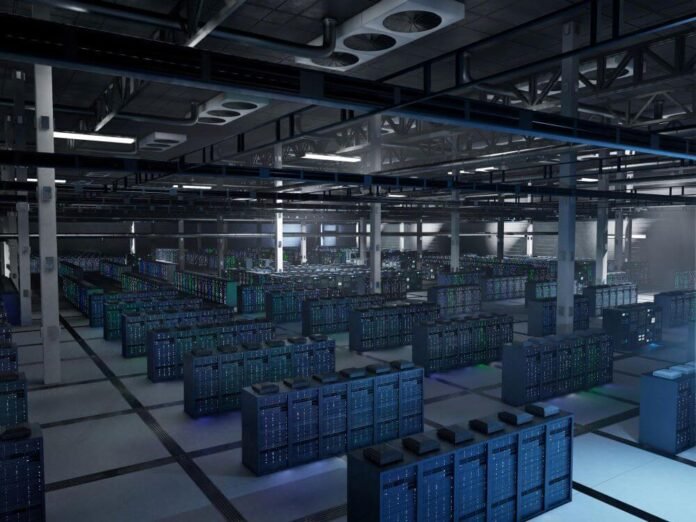
Cooling systems in data centers have become one of the most consequential infrastructure decisions any facility manager will make. Modern server racks push power densities that would have seemed absurd a decade ago, and the systems keeping that heat under control are struggling to keep pace. Layer in the R-410A phase-down under the AIM Act, rising energy costs, and a shrinking pool of qualified technicians, and this space gets complicated fast. After reviewing dozens of vendors and real-world deployments, this guide breaks down the top five options worth knowing.
The research approach for this ranking
Each company was assessed using publicly available information pulled from official websites, industry directories, verified case studies, and user reviews across multiple platforms. Only options with a documented track record in data center thermal management made the final list.
→ See the full research breakdown
- CSI Store – Best for data center cooling with engineered fabrication and sanitary process systems
- CoolIT Systems – Best for enterprise data center cooling and high-performance compute systems.
- McMaster-Carr – Best for industrial supply and HVAC parts distribution
- MSC Industrial Supply – Best for manufacturing and MRO product distribution
- Schneider Electric – Best for enterprise energy management and building automation
Why Cooling Systems Matter for Your Business
Picking the wrong cooling approach for a data center isn’t just an operational headache. It directly hits your bottom line through wasted energy, oversized equipment, and systems that short-cycle because someone skipped a proper Manual J load calculation. With energy costs climbing and refrigerant regulatory transitions reshaping what equipment you can even buy, the margin for error keeps shrinking.
A well-matched system, sized correctly and built around your actual rack density, shows up in SEER2/EER2 ratings that hold over time. It shows up in system reliability that doesn’t blip during peak demand. The right choice now saves you from an expensive retrofit conversation two years from now, and that’s why the vendor and system you choose matter far more than most facility teams initially expect.
Top 5 Cooling Systems Breakdown and Comparison
Note: All data in this table is sourced from review platforms and the official websites of the listed companies.
| Company Name | Years Operating | Headquartered In |
| CSI Store | Since 1977 | Springfield, MO |
| CoolIT Systems | Since 2001 | Calgary, Canada |
| McMaster-Carr | Since 1901 | Elmhurst, Illinois |
| MSC Industrial Supply | Since 1941 | Davidson, North Carolina |
| Schneider Electric | Since 1838 | Rueil-Malmaison, France |
-
CSI Store – Best for Engineered Fabrication and Data Center Cooling
What Does CSI Store Do?
CSI Store has been building engineered process systems since 1977, covering food, beverage, pharmaceutical, and data center sectors. They bring together fabrication, engineering, and distribution under one roof, with five US distribution centers and ASME Section IX certified welders on staff. Facilities that need purpose-built thermal management can access their industrial cooling solutions for modern facilities backed by CNC machining, Level II inspection protocols, and climate-controlled fabrication. Their CSI Reliability maintenance program means the relationship doesn’t stop at delivery.
Why Does CSI Store Stand Out for Cooling Systems?
Custom fabrication for data center liquid cooling is a gap that off-the-shelf distributors rarely fill with the precision that high-density compute environments actually need. CSI Store’s combination of ASME-certified welding, specialty alloy inventory, and in-house process skid fabrication gives facilities a partner that can build to spec rather than adapt from catalog.
Summary of Real User Reviews:
From what the available information shows, CSI Store’s reputation is built around responsiveness and technical depth rather than volume sales. Clients in regulated industries consistently point to the in-house fabrication capability as the differentiator. That kind of hands-on build quality is rare in a space where most distributors are simply moving boxes.
-
CoolIT Systems – Best for Enterprise Data Center and HPC Cooling
What Does CoolIT Systems Do?
CoolIT Systems designs and manufactures direct liquid cooling equipment built for hyperscalers and high-performance compute clusters. Their portfolio covers cold plates for CPUs and GPUs, coolant distribution units, rack-mounted components, and fully integrated cooling loops. Founded in 2001 and based in Calgary, their team of 650 handles everything from system design and prefabricated piping to global onsite service. And what’s worth understanding about their approach is that they treat cooling as a full-stack engineering problem, not just a hardware sale.
Why Does CoolIT Systems Stand Out for Cooling Systems?
Data centers running AI workloads are dealing with rack power densities that air cooling simply can’t address anymore, and CoolIT’s Rack DLC technology was built precisely for that gap. Their 100% leak testing protocol and ISO9001:2015 certification mean every unit ships with manufacturing accountability that matches the stakes of the environments it enters.
Summary of Real User Reviews:
The clearest signal of CoolIT’s performance is where their technology shows up in seven of the top ten supercomputers globally. Industry recognition, including the Deloitte Technology Fast 500 and Financial Times’ Top 250 Americas’ Fastest Growing Companies, reinforces what the deployments already suggest. From what the data shows, customers trust them with infrastructure where failure isn’t an option.
-
McMaster-Carr – Best for Industrial Supply and HVAC Parts Distribution
What Does McMaster-Carr Do?
McMaster-Carr has been supplying industrial hardware, tools, raw materials, and maintenance equipment since 1901. With over 580,000 products and 98% shipped from stock, they’re the go-to when a facility needs a part fast and can’t wait on lead times. Their no-order-minimum policy and next-day delivery (if ordered by 6 p.m. EST) make them genuinely useful for HVAC contractors sourcing components mid-project. CAD models, live customer service reps, and transparent pricing round out a fulfillment model that’s hard to match at this scale.
Why Does McMaster-Carr Stand Out for Cooling Systems?
The real problem McMaster-Carr solves isn’t product selection. It’s the urgency gap that hits when a cooling system component fails, and the next scheduled delivery is three days out. Their fulfillment speed, combined with a catalog that covers hardware, fasteners, raw stock, and specialty materials, means one supplier can often cover what used to require three phone calls.
Summary of Real User Reviews:
McMaster-Carr earns consistent praise for customer service that routes to real people, not automated queues, and for fulfillment reliability that contractors and facility teams can actually plan around. The 2024 Campus Forward Award recognition hints at a company investing in its own talent pipeline, which tracks with the quality of service people report. That kind of consistent execution over 120-plus years is difficult to argue with.
-
MSC Industrial Supply – Best for Manufacturing and MRO Product Distribution
What Does MSC Industrial Supply Do?
MSC Industrial Supply brings over 80 years of MRO and metalworking distribution experience to a catalog of more than 2 million items. Based in Davidson, North Carolina, they serve machine shops, manufacturers, and government agencies through e-commerce, catalogs, and customer care centers. For HVAC contractors and facility teams, they stock electrical supplies, fasteners, power transmission components, and materials handling equipment, all from a single distributor. Their in-plant inventory management services (think vendor-managed stock programs) remove a real operational burden for teams running large facilities.
Why Does MSC Industrial Supply Stand Out for Cooling Systems?
The challenge MSC addresses is the sourcing difficulty that comes with managing multiple product categories across a large facility’s cooling infrastructure. Their integrated inventory management approach cuts the purchasing overhead that eats into a maintenance team’s time when they’re sourcing from a dozen different suppliers.
Summary of Real User Reviews:
MSC’s Great Place To Work certification across multiple consecutive years suggests an internal culture that carries through to client-facing service, which lines up with what customers report. Awards, including the ISA 2021 Innovation Impact Award, point to a company that’s not just distributing products but contributing to the sector’s direction. From what the reviews show, the breadth of the catalog, combined with technical support, is what keeps large accounts coming back.
-
Schneider Electric – Best for Enterprise Energy Management and Building Automation
What Does Schneider Electric Do?
Schneider Electric covers electrification, automation, and digitalization for industries, infrastructure, and data centers at a scale that few competitors can match. Founded in 1838 and headquartered in Rueil-Malmaison, France, they employ over 159,000 people globally. Their EcoStruxure IoT platform connects cooling equipment, power distribution, and building automation into a single monitored environment. For data center operators dealing with rising energy costs and ASHRAE 90.1 compliance requirements, their smart building automation tools provide real-time visibility into system performance.
Why Does Schneider Electric Stand Out for Cooling Systems?
Schneider addresses one of the toughest problems in data center thermal management, the gap between cooling equipment running and cooling equipment running well. Their EcoStruxure platform turns cooling infrastructure from a passive system into a monitored, adjustable asset, which matters a lot when every kWh of wasted energy shows up directly on operating costs.
Summary of Real User Reviews:
Schneider Electric’s TIME Magazine recognition as the World’s Most Sustainable Company and their platinum-level environmental rating for five consecutive years aren’t just awards for a trophy case. They signal a company whose technology philosophy lines up with where data center energy management is heading. From what the data shows, enterprise clients value the combination of scale, platform depth, and a track record that spans nearly two centuries.
Research Methodology and Selection Process
Putting together a ranking like this requires more than a quick scan of company websites. The goal was to surface options that have real proof behind them, not just polished marketing pages.
Initial Data Collection
The process started by casting a wide net across industry directories, trade publications, review platforms, and official company websites. A broad longlist was assembled from sources that actively track vendors in data center thermal management and related HVAC infrastructure. Both specialized cooling companies and broader industrial suppliers with documented data center applications were included at this stage, since the real-world supply chain for cooling projects often pulls from both categories.
Shortlisting Phase
Once the longlist was in place, options without verifiable track records were removed. This meant filtering out companies where review patterns were thin, inconsistent, or impossible to corroborate across multiple sources. Companies that appeared in only one channel, without any supporting case studies, client mentions, or independent coverage, were set aside regardless of how strong their own marketing materials looked.
Verification of Claims
The remaining candidates were assessed by cross-referencing what each company claimed on their own site against what showed up in third-party reviews, industry coverage, and documented project outcomes. Where a company claimed manufacturing excellence, certifications, or specific technical capabilities, those claims were checked against publicly available evidence. Companies where the self-reported story and the third-party record diverged were flagged or removed.
Authority and Industry Contribution Layer
Beyond straightforward verification, each company was evaluated for signals of genuine industry standing. This included awards from recognized bodies, mentions in trade publications, rankings on independent performance lists, and evidence that the company contributes meaningfully to the sector rather than simply operating within it. Companies like CoolIT Systems appearing in supercomputer deployments, or Schneider Electric receiving sustained environmental recognition, carry a different kind of authority than a press release.
Cooling Systems-Specific Evidence
The final layer focused on data center and thermal management relevance. Each company was checked for dedicated service pages, documented cooling projects, and verified client feedback tied to actual thermal management challenges. Generic industrial suppliers were included only where their cooling-relevant inventory and fulfillment capabilities were clear and documented. The goal at this stage was ensuring every company on the final list had a real, traceable connection to the problem this article addresses, not just a tangential product overlap.
How to Choose the Right Cooling Systems
Start by mapping your actual rack density and load profile before comparing vendors. A system that works well at 5kW per rack behaves very differently at 20kW, and that gap is where most cooling decisions go wrong.
- Industry and Domain Experience: Look for vendors with documented deployments in environments similar to yours. Supercomputer-grade cooling experience and pharmaceutical-grade fabrication standards both signal technical seriousness that general industrial suppliers may not match.
- Features and Service Offerings: Check whether the vendor covers design, fabrication, installation, and ongoing maintenance or just ships product. End-to-end support matters when system failures aren’t an option.
- Pricing Structure: Liquid cooling and enterprise automation carry real cost (not cheap, but worth it for high-density environments). Get total-cost clarity upfront, including installation, commissioning, and service contracts.
- Results Measurement: Ask vendors how they track SEER2/EER2 performance and system reliability post-installation. Vendors who don’t measure outcomes after deployment are harder to hold accountable.
- Industry Knowledge and Compliance: Confirm familiarity with ASHRAE 90.1, EPA Section 608, and the R-410A phase-down timeline. A vendor who isn’t tracking refrigerant regulatory transitions could create compliance problems you inherit.
Bottom Line
Data center cooling is no longer a background infrastructure decision. Rising rack densities, refrigerant phase-downs, and energy cost pressures have moved it to the front of every facility planning conversation. The five options covered here each address a different part of that challenge, from fabricated liquid cooling systems to enterprise automation platforms. Choosing the right fit means matching technical capability to your actual load profile, and that match will matter even more as compute densities continue climbing.